Service · Clearwater, FL
Landscape Edging in Clearwater
Steel, paver or trench edging that actually holds its line, so mulch stays in the bed and St. Augustine runners stop creeping into it. Installed clean and level, not a rope of loose plastic strip.
Edging that holds the line between lawn and bed
Without a real edge, two things happen on a Florida property, usually within one growing season. St. Augustine and Bahia both spread by runners and will creep straight into a mulch bed with nothing stopping them, and mulch migrates the other direction onto the lawn every time it rains hard or gets blown by a mower. A proper edge solves both at once, and it is the difference between a bed border you re-cut every few weeks with a string trimmer and one that holds its shape for years.
We install three types of edging depending on the look and the budget: steel, paver, and trench, sometimes called spade edging. Each solves the same problem differently, and the right one depends on how permanent you want the line and how much you want to spend maintaining it.
Steel edging
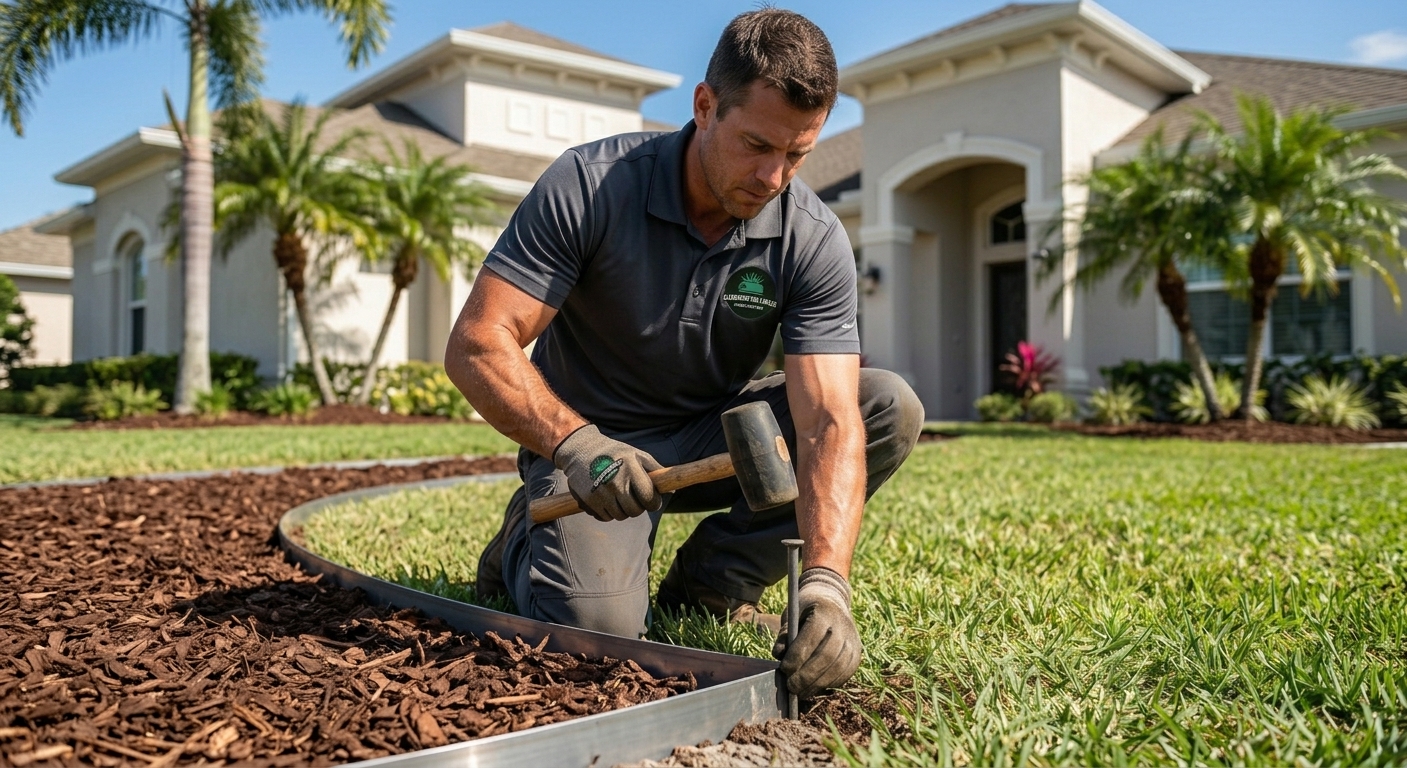
Steel is the most durable option we install and holds a straight or curved line better than anything else on this list. It sits just at grade so it is nearly invisible once mulch or turf grows up to it, and it will not heave or shift the way plastic edging does after a year or two of Florida heat cycles. It costs more per linear foot than trench edging but needs essentially no maintenance once it is in the ground.
Paver edging
Paver or brick edging gives beds a finished, visible border rather than an invisible line, which is why it shows up most often along front walkways and entrance beds where the border itself is part of the landscaping. It is more labor-intensive to install correctly, since each paver needs a level base and consistent spacing, which is why it costs more than steel per linear foot despite steel being the tougher material underground.
Trench edging
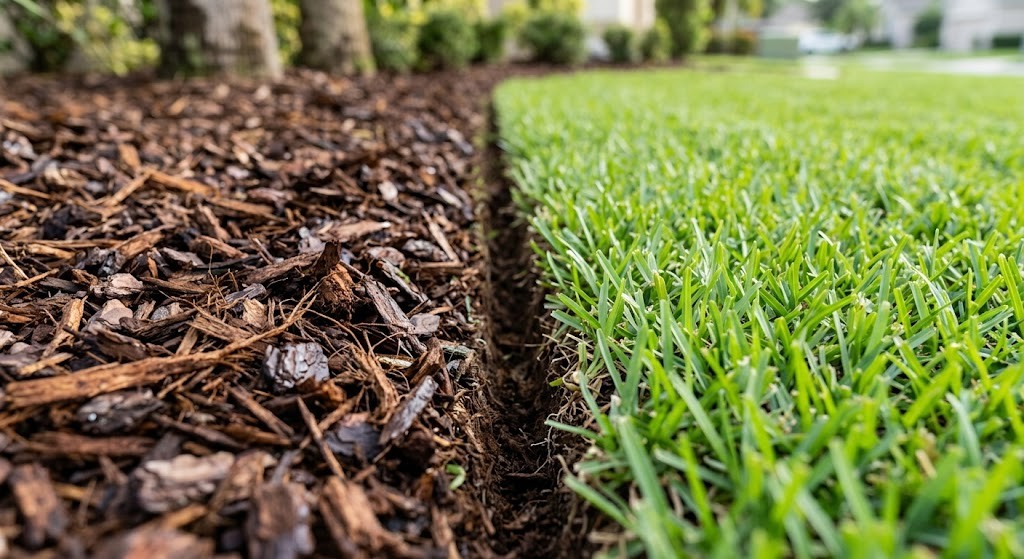
Trench, or spade, edging is the cheapest option: a clean, angled cut between bed and lawn with no physical material installed at all. It looks sharp immediately after cutting and costs the least, but grass runners will cross a trench line within a few months without a physical barrier, so it needs re-cutting two to four times a year to hold. It is the right call for a tight budget or a bed border that gets touched up as part of regular lawn maintenance anyway.
What edging includes
- Line marked and approved before any cutting or digging starts.
- Base prep — trench dug to consistent depth, or gravel base set for pavers.
- Material installed — steel stakes driven and rail set, or pavers leveled and set in place.
- Backfill and compaction along both sides so the edge does not shift or lean.
- Cleanup — excess soil hauled off, final line checked for level and consistency.
What landscape edging costs
Steel edging runs $4 to $8 per linear foot installed, with the range driven by yard access and how much curve is in the line versus straight runs. Paver edging runs $7 to $14 per linear foot depending on paver type and base prep needed. Trench edging runs $2 to $4 per linear foot since there is no material cost, just labor. A typical residential bed border, 40 to 80 linear feet, lands between $150 and $500 depending on which type you choose.
| Job | Typical range | What moves the price |
|---|---|---|
| Trench (spade) edging | $2 – $4/linear ft | Length and soil condition |
| Steel edging | $4 – $8/linear ft | Length, curves, access |
| Paver edging | $7 – $14/linear ft | Paver type and base prep |
| Curved sections vs. straight runs | +15% – 25% | More layout and cut time |
| Old plastic edging removal | $1 – $2/linear ft | Condition and depth |
| Combined with mulch install | Bundled discount | Quoted on site |
Choosing the right edging for your beds
For beds along a front entrance or walkway where the border itself is visible landscaping, paver edging earns its higher cost. For side and back yard beds where the goal is just keeping mulch in and grass out without anyone noticing the edge, steel does the job for less and lasts just as long. Trench edging makes sense as a budget option or for beds already getting regular maintenance attention where re-cutting a couple times a year is not a hardship.
Pairing edging with mulch
New edging holds up best when it goes in at the same time as a fresh mulch layer, since we are already clearing and defining the bed line for the mulch anyway. See mulch-installation for combined pricing, which typically runs less than booking the two as separate visits.
Where we install edging
Throughout Pinellas County, including Clearwater Beach, Dunedin, Palm Harbor, Safety Harbor, Largo, Belleair, Countryside and Oldsmar.
Questions
Landscape Edging FAQs
Steel holds up best against Florida heat cycles without heaving or shifting, and it sits nearly invisible at grade. Paver edging is the better choice when you want the border to be a visible design feature rather than an invisible line. Trench edging is the budget option but needs re-cutting two to four times a year.
Trench edging runs $2 to $4 per linear foot, steel runs $4 to $8, and paver edging runs $7 to $14, mostly driven by material and base prep. A typical residential bed border of 40 to 80 linear feet lands between $150 and $500 depending on the type you choose.
Steel and paver edging both create a physical barrier that St. Augustine and Bahia runners cannot cross, so yes, reliably. Trench edging is just a cut line with no barrier, so grass will cross it again within a few months without periodic re-cutting.
No, not as a new install. Standard black plastic strip edging heaves out of the ground within a year or two under Florida heat cycles and rarely holds a clean line. We remove old plastic edging as part of a job and replace it with steel, paver or trench edging instead.
Well over a decade in most cases with essentially no maintenance. It does not heave, shift or need re-cutting the way trench edging does, and it holds a straight or curved line better than any other material we install.
Both. Steel edging in particular bends cleanly to follow curved bed lines, which is one of its advantages over rigid paver borders. Curved sections generally add 15 to 25 percent to the linear-foot cost because of the extra layout and cutting time involved.
Before, or at the same visit. Edging and mulch installation share the same bed-clearing and line-defining prep work, so bundling them saves a mobilization, and the mulch stays contained inside a finished border from day one rather than getting redone once edging goes in later.
A clean spade cut is typically 4 to 6 inches deep with an angled face, enough to slow runner grass temporarily and hold a crisp visual line. It is not a permanent barrier, which is why it needs periodic maintenance re-cutting rather than a one-time install.
Yes, both. Tree rings, curved island beds and straight foundation borders are all standard work. Curved and irregular shapes take more layout time, which is reflected in the per-linear-foot pricing, but they are not a problem for any of the three edging types we install.
Related
Other lawn work we do
Get a price for your landscape edging
Free on-site estimate with a flat written price before we start. Call or send photos and we will tell you what it costs.
Mon–Sat 7:00am–7:00pm · Licensed & insured · Serving Clearwater, Largo, Dunedin & Palm Harbor