Every sod quote starts with a type decision, and it usually gets treated as a single choice for the whole yard. That's often wrong. Sun exposure, foot traffic and budget vary from the front yard to the side yard on the same lot, and matching type to the specific conditions beats picking one grass and running it everywhere.
St. Augustine / Floratam
Floratam is the default lawn grass across most of Pinellas County, and it earns that position. Wide, coarse blades, a dense dark-green canopy, and it fills in fast once established. It tolerates moderate shade better than Bahia, which matters on lots with mature oaks.
Newer St. Augustine cultivars like CitraBlue and Palmetto push shade tolerance further — CitraBlue in particular handles noticeably less sun than standard Floratam and keeps a bluish-green color that a lot of homeowners prefer on its own. Both cost somewhat more per pallet than standard Floratam.
The trade-off is water and pest pressure. Floratam wants roughly three-quarters of an inch to an inch of water a week during establishment and needs consistent irrigation after that to stay dense. It's also the variety chinch bugs prefer — a Florida lawn pest that can kill a patch of Floratam in a matter of weeks in high summer if it goes unnoticed.
Zoysia
Finer blade, denser growth habit, and genuinely better drought tolerance than Floratam once established. Because it grows slower, it also crowds out weeds better over time — fewer gaps for seed to land in. It handles moderate foot traffic well and has a manicured, almost carpet-like look that a lot of homeowners are specifically shopping for.
The cost is real: Zoysia runs $0.85 to $1.10 per square foot installed, the top of the local range, and slow growth means it also takes longer to fully knit together after installation — figure four to six weeks before it looks seamless, versus two to three for Floratam. It's a poor choice for heavy shade; it thins out fast under a dense canopy.
Bahia
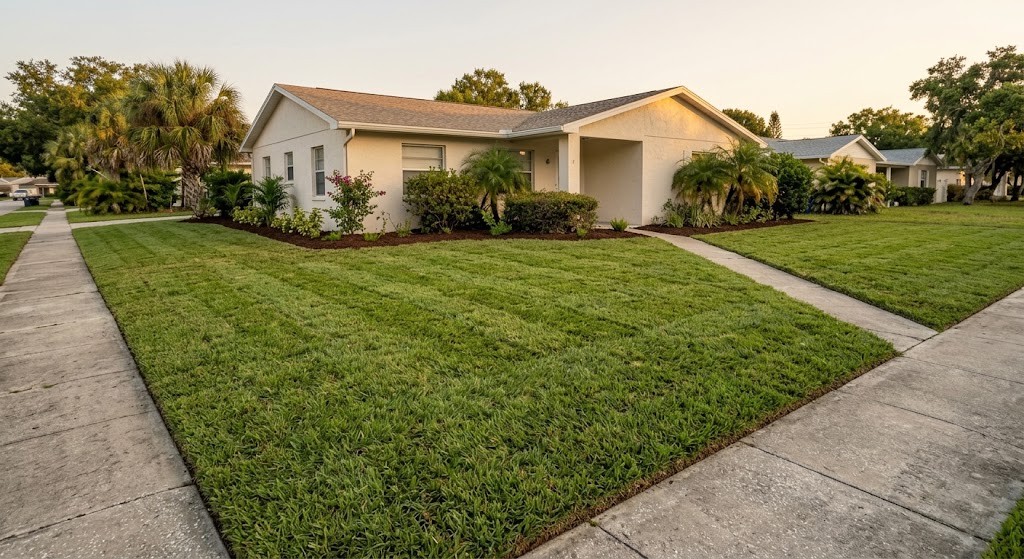
The toughest and cheapest option by a wide margin, and the only one that makes sense on large acreage. Bahia tolerates poor soil, drought, and neglect better than either of the other two, which is why it's standard on rural Pinellas lots, pastures, and anywhere irrigation coverage is unreliable.
It has real downsides on a typical residential lot. Shade tolerance is the worst of the three — Bahia thins badly under trees. It also sends up seedheads on tall stalks within days of mowing, which means more frequent cuts to keep a tidy look, and the blade texture is coarser and less uniform than Floratam or Zoysia. For a small, shaded suburban yard where appearance matters, Bahia is usually the wrong call.
Best Sod Type for Florida Lawns: Side-by-Side Comparison
| Item | Detail |
|---|---|
| Shade tolerance | Floratam: good · CitraBlue: better · Zoysia: fair · Bahia: poor |
| Drought tolerance once established | Zoysia: best · Bahia: good · Floratam: fair |
| Cost installed | Bahia $0.50–0.65 · Floratam $0.65–0.85 · Zoysia $0.85–1.10 per sq ft |
| Establishment time | Floratam/Bahia 2–3 wks · Zoysia 4–6 wks |
| Pest pressure | Floratam: chinch bugs · Zoysia: lower · Bahia: mole crickets |
| Best use case | Bahia: acreage/rural · Floratam: standard subdivision · Zoysia: manicured, drought-prone |
Two newer cultivars worth knowing before you shop by name alone. Empire Zoysia is a coarser-bladed, faster-establishing Zoysia variety than the classic fine-bladed cultivars, which narrows the establishment-time gap with Floratam while keeping most of Zoysia's drought tolerance — it costs slightly less than premium Zoysia cultivars for that trade. Seville St. Augustine is a dwarf variety that stays lower and denser than standard Floratam without the price jump of CitraBlue, and it's becoming a common request for homeowners who want a tighter, more manicured St. Augustine look without switching species entirely. Neither is stocked by every local grower, so ask specifically by name if one of these fits your yard, since a generic quote will usually default to standard Floratam or a common Zoysia cultivar.
Mowing height and maintenance differences
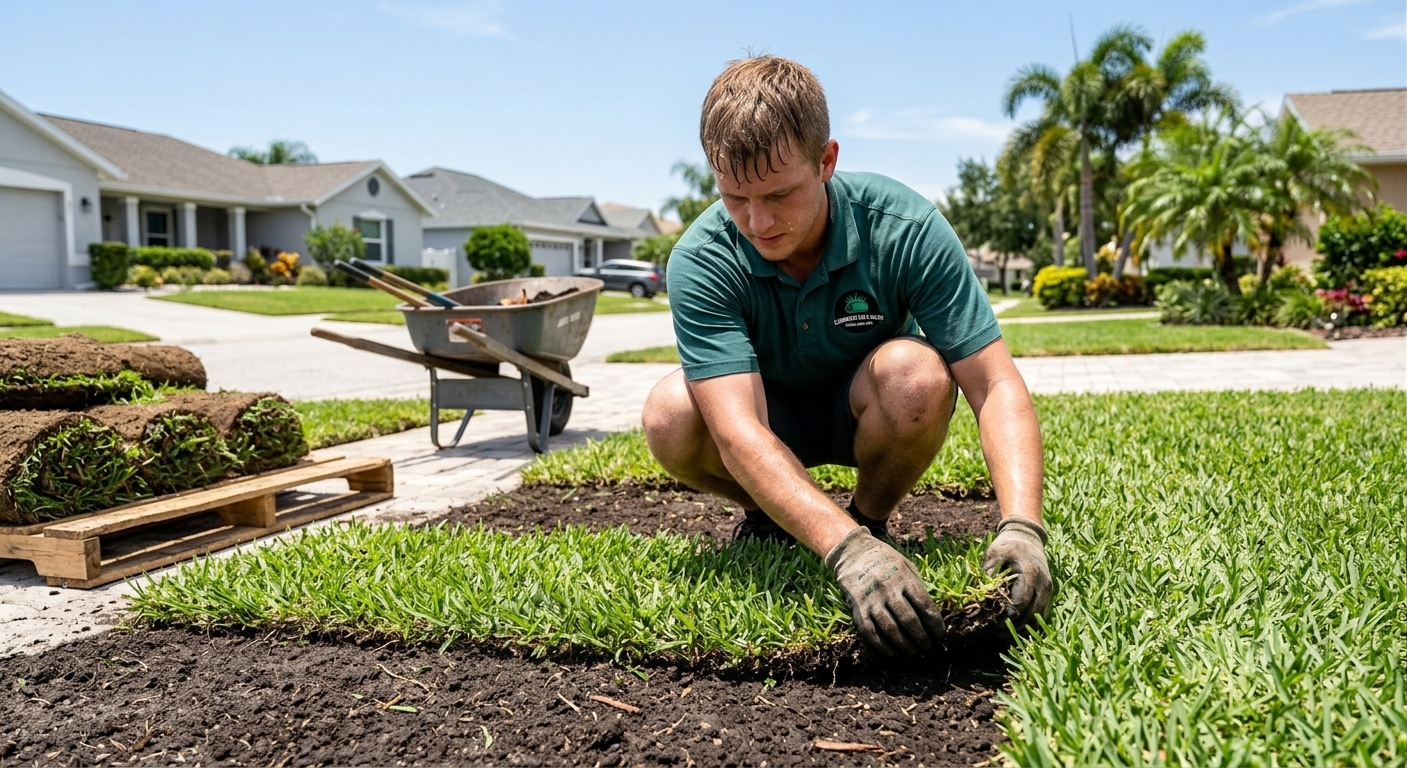
Mowing height is where a lot of homeowners get tripped up after installation, because each type wants something different. Floratam looks best cut at 3.5 to 4 inches — scalp it shorter and you expose the runners to sun stress and open the canopy to weeds. Zoysia can be mowed lower, generally 1.5 to 2.5 inches depending on the cultivar, and holds a tighter, more formal look at that height. Bahia tolerates a wide mowing range but needs cutting more often in summer purely to keep the seedheads down, regardless of how the blade itself is growing.
Fertilizer needs follow the same pattern as water needs. Floratam is the heaviest feeder of the three and shows nutrient deficiency fastest — yellowing between the veins is a common sign on St. Augustine specifically. Zoysia needs less nitrogen to stay dense and can actually thin out if it's over-fertilized, which pushes it to grow faster than its slow, tight habit is built for. Bahia gets by on the least of any of them, which is a large part of why it's the standard choice for acreage nobody wants to fertilize regularly.
The Best Sod for Florida Lawns, Neighborhood by Neighborhood
Sun and canopy vary enough across our service area that "best sod type" genuinely changes street to street. Older, tree-lined streets in Harbor Oaks and parts of Belleair Bluffs carry enough mature oak canopy that CitraBlue or another shade-tolerant St. Augustine cultivar consistently outperforms standard Floratam over a full year, not just through one shaded season. Newer, more open subdivisions in Oldsmar and parts of Countryside tend to have full sun with irrigation systems sized for a standard lawn, which is exactly the condition standard Floratam or Zoysia was bred for. If your street doesn't obviously match one of those patterns, the 1pm shade test above is a better guide than any neighborhood generalization.
What we actually recommend, lot by lot
For a typical unshaded Clearwater subdivision lot, standard Floratam is still the right default — it's proven, it's mid-priced, and local irrigation contractors and mowing crews all know how to maintain it. For lots with real canopy from oaks or larger palms, CitraBlue earns its higher price. For anyone tired of watering, or with a large lot where irrigation coverage is spotty at the edges, Zoysia's drought tolerance pays for itself within a few summers. For acreage, easements, or anywhere the goal is ground cover rather than a manicured lawn, Bahia is the only sod type that makes economic sense.
A few practical factors that don't show up in most type comparisons but should weigh into the decision: households with dogs benefit from Zoysia's wear tolerance and its resistance to urine spot damage compared with Floratam, which scars more visibly. Pool decks and courtyards with reflected heat off pavers run hotter and drier than the rest of the yard, favoring Zoysia or Bahia over St. Augustine in that specific zone even if the rest of the lot is Floratam. And any lot bordered by a canal or retention pond tends to hold more moisture at the edges, which is where St. Augustine varieties, not Zoysia, handle the wetter margin better.
Whatever type you land on, get the ground under it right first — soil prep and grading matter as much as the sod itself for how fast any type actually roots in, and that's covered on our lawn bed prep and leveling page. Once the new lawn is down, a clean mulched edge along beds and walkways finishes the look and keeps grass from creeping into planting areas — see mulch installation for that step.
Whatever you choose, pest pressure is worth planning for before it shows up. Chinch bugs hit St. Augustine varieties hardest, and they can take out a patch faster than most homeowners expect — check for them if you see a spreading brown patch that doesn't respond to extra water. We cover full pricing and installation on our sod installation page, and if your lawn is more weeds than grass right now, start with how to prep your lawn before sod. If cost is what's actually driving the type decision, see our full breakdown of sod cost in Clearwater before you rule anything out on price alone.