Most sod that fails to take root didn't fail because of the sod. It failed because of what happened, or didn't happen, to the ground underneath it in the two weeks before installation. Prep isn't glamorous, but it's the actual difference between a lawn that roots in ten days and one you're troubleshooting for months.
How to Prep Your Lawn for Sod: The 5-Step Sequence
There's a fixed order to lawn prep before sod, and skipping ahead is where most of the shortcuts happen. Kill the old grass first, grade the cleared ground second, test and amend the soil while grading settles, fix irrigation before anything is covered up, and time the sod delivery for the day the ground is actually ready — not a date picked in advance. Each step below covers what it involves, roughly what it costs, and why doing it out of order causes problems that show up weeks later instead of on day one.
Step 1 — Kill the existing grass and weeds
New sod laid over live grass or established weeds doesn't root into soil — it roots into a dying mat of old vegetation, which decomposes underneath it and leaves the new sod sitting on an air pocket. Glyphosate application is the standard approach, and timing matters: apply it 7 to 14 days before tilling or removal, enough time for it to translocate through the plant and fully kill the root system rather than just browning the leaves. Skipping that wait and tilling too early leaves live root fragments that resprout under the new sod.
Step 2 — Grade and level the ground
Low spots become standing water after the first heavy rain, and standing water under new sod is a fast way to rot roots before they ever establish. High spots dry out faster than the rest of the yard and stay visibly stressed while everything around them looks fine. Grading also needs to account for drainage away from the foundation — a common oversight is leveling a yard flat without maintaining the slight slope that keeps water moving away from the house.
Step 3 — Test soil and amend if needed
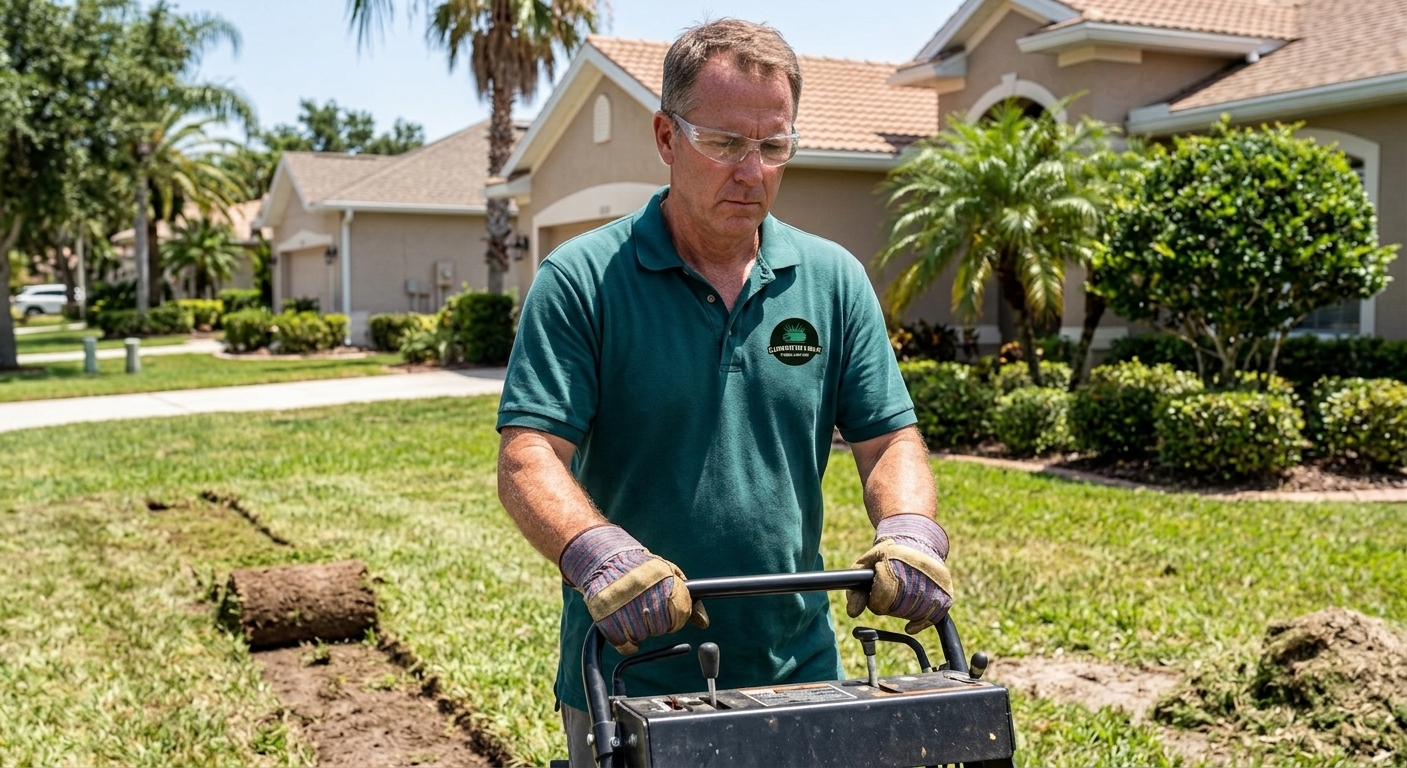
A basic soil test tells you pH and whether the soil is missing anything sod roots need early on. Pinellas County soil runs sandy in a lot of neighborhoods, which drains fast but holds nutrients poorly. A modest amendment — compost or a starter fertilizer worked into the top few inches before sod goes down — gives new roots something better to grab onto than straight sand.
Soil Prep Differences Across Pinellas County
Soil isn't uniform across our service area, and it changes how much amendment a yard actually needs before sod goes down. Beachside lots in Clearwater Beach and Island Estates often sit on nearly pure beach sand with almost no organic content, which drains so fast that new sod roots can dry out between waterings even on a normal schedule — those yards typically need a heavier compost amendment than a standard mainland lot. Inland areas like Countryside and Largo generally have a sandier loam with somewhat better nutrient and moisture retention, needing a lighter touch. If you're not sure which category your yard falls into, a basic soil test before ordering sod is a small cost against the risk of amending too little on a beachside lot or paying for amendment a mainland yard didn't need.
Step 4 — Check and repair irrigation before sod goes down
New sod needs consistent, even watering for the first two to three weeks, and a dry patch from one bad sprinkler head can cost you that section of the lawn. Run every zone, watch for heads that are clogged, misaligned, or spraying the driveway instead of the yard, and fix anything you find. This is also the moment to confirm coverage actually reaches every corner — new construction and older systems both commonly have dead zones nobody noticed under the old, more forgiving lawn.
Step 5 — Time the delivery for installation day
Sod is alive on the pallet, and it doesn't hold up well stacked in Florida heat. The grass blades on the bottom of a pallet start yellowing from lack of light and heat buildup within 24 hours, and by 48 hours a meaningful percentage of a pallet can be damaged beyond full recovery. Order sod to arrive the same day it's going in the ground, not a few days ahead "to be safe" — with sod, safety runs the other direction.
| Item | Detail |
|---|---|
| Step | Timing before install |
| Glyphosate application | 7 – 14 days before |
| Grading and leveling | Same week as install, after old grass is dead |
| Soil test / amendment | 1 – 2 weeks before, results-dependent |
| Irrigation check and repair | Within a few days before install |
| Sod delivery | Day of installation, ideally morning |
What Lawn Prep Actually Costs
Prep pricing is usually bundled into a full sod installation quote, but it helps to know what each piece runs on its own if you're comparing quotes or doing part of the work yourself. Glyphosate application and old lawn clearing typically runs $0.10 to $0.25 per square foot depending on how established the existing grass or weeds are. Basic grading and leveling is often included in a standard install but runs $0.15 to $0.40 per square foot on its own if real regrading or drainage correction is needed. A soil test runs $15 to $40 through most local extension services or landscape suppliers, and a compost or starter fertilizer amendment adds roughly $0.05 to $0.10 per square foot. Irrigation head repair varies the most — a simple head swap is $15 to $30 per head, while a broken lateral line can run $75 to $200 depending on how deep and how far it has to be dug up. None of these steps are optional if the underlying problem exists; skipping them doesn't remove the cost, it just moves it to after the sod is already down and harder to fix.
A note on timing the whole sequence
These five steps aren't independent — they stack in order, and rushing the sequence to hit a install date is where most prep shortcuts happen. Glyphosate needs its 7 to 14 days before anything else starts. Grading has to happen after the old grass is dead and cleared, not before, or you're just regrading dead thatch instead of soil. Irrigation checks can happen in parallel with grading since they don't depend on the ground being bare. Worked backward from an install date, that puts the glyphosate application about two and a half to three weeks out, which is longer than most homeowners expect when they first call.
What happens if you skip prep
- Sod laid over live grass: roots into decomposing thatch instead of soil, leading to soft spots and dieback within weeks.
- Sod laid on ungraded ground: low spots rot, high spots dry out and brown while the rest of the yard is fine.
- Sod laid before irrigation is fixed: uneven watering creates a patchy lawn that never fully recovers without re-sodding the dry sections.
- Sod that sat too long on the pallet: yellowed, weakened grass that struggles to root even with perfect prep everywhere else.
How We Prep Your Lawn for Sod Installation
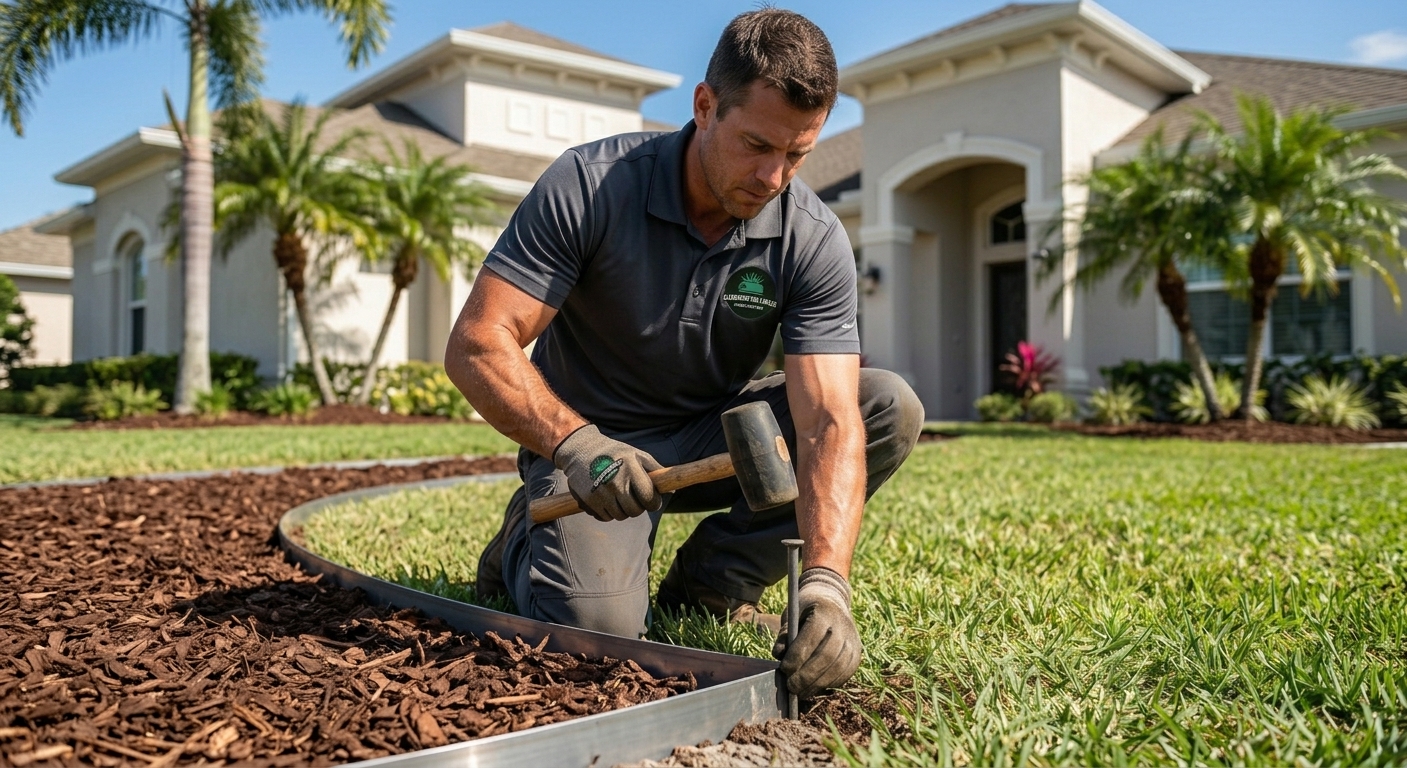
We walk every yard before quoting, check irrigation coverage as part of that visit, and won't schedule sod delivery until the ground is actually ready for it — not on a generic calendar date. If your yard needs real grading or drainage correction, that's covered on our lawn bed prep and leveling page, and full sod installation pricing is on our sod installation page. Once the new lawn is in, a lot of customers finish the job with a clean edge along driveways and beds rather than leaving sod to meet hardscape at a rough line — see landscape edging for that step. If you're weighing sod against a full renovation cost first, see how much sod costs in Clearwater, and if you haven't settled on a sod type yet, our comparison of the best sod type for Florida lawns covers which one fits your yard's sun and traffic.