Homeowners moving to Florida from a state where seeding a lawn is normal often ask why every landscaper here quotes sod and nobody mentions seed. The reason is more concrete than tradition — for the grass most Clearwater lawns are made of, seed genuinely isn't an option.
Why St. Augustine can't be seeded
St. Augustine, including Floratam and CitraBlue, doesn't set commercially viable seed. It's propagated entirely by sod, plugs, or sprigs — pieces of living grass, not seed packets. If a bag at a big-box store claims to be "St. Augustine seed," it isn't; it's mislabeled or it's a different species entirely. This alone rules out seeding for the majority of Pinellas County lawns before cost even enters the conversation.
Where seed technically works — and why it still loses
Bahia and some Zoysia varieties do produce viable seed. Even where seed is an option, it loses to sod on a typical residential lot for a few compounding reasons.
Time to establish
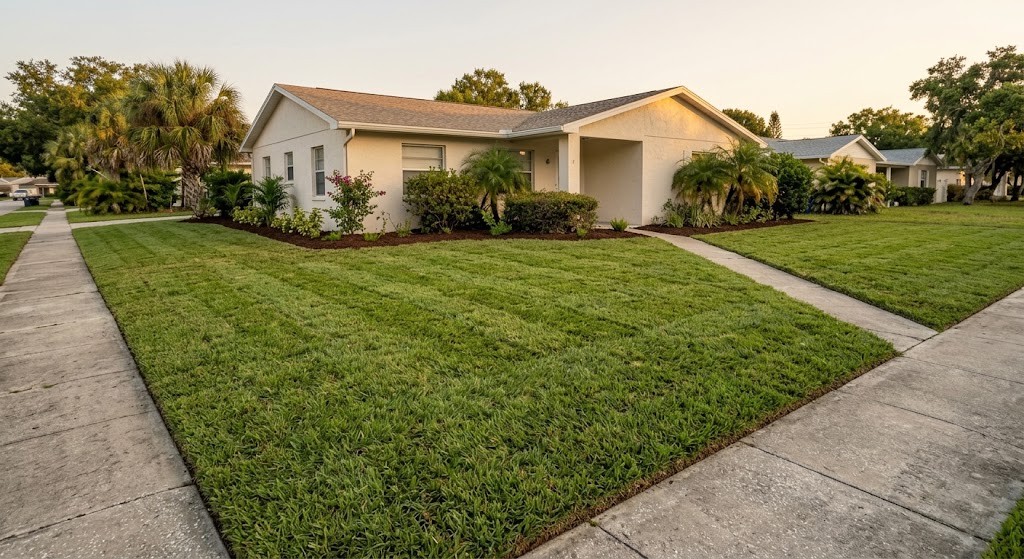
Sod is functionally a finished lawn the day it's installed — roots knit into the soil within one to two weeks and it can handle light foot traffic almost immediately. Seed takes two to three months to reach anything close to full coverage, and that's under ideal watering. During that window you have bare dirt, not a lawn.
Erosion during Florida's rainy season
Bare soil with germinating seed has no root structure to hold it, and Central Florida's rainy season delivers heavy, fast downpours rather than gentle steady rain. A hard summer storm on a newly seeded yard can wash seed and topsoil straight into the street before it ever germinates. Sod has an intact root mat from day one and simply doesn't have this problem.
Weed competition
Bare seeded soil is an open invitation to weed seed already sitting in the ground, and weeds germinate faster than turfgrass in Florida heat. By the time your seeded grass fills in, it's often filling in around an established weed population rather than ahead of it. Sod's dense, mature canopy shades out weed seed from the moment it's laid.
| Item | Detail |
|---|---|
| Time to usable lawn | Sod: 1–2 wks · Seed: 2–3 months |
| Erosion risk in rainy season | Sod: minimal · Seed: high until established |
| Weed competition | Sod: suppressed from day one · Seed: high during establishment |
| Upfront cost | Sod: higher · Seed: lower |
| Species options | Sod: Floratam, Zoysia, Bahia · Seed: mainly Bahia |
Sod vs. Seed Cost Comparison for a Florida Lawn
Put real numbers next to the sod-vs-seed decision and the gap looks smaller than most homeowners expect. Bahia seed, including a starter fertilizer and the extra water it needs to germinate, typically runs $0.08 to $0.15 per square foot in material alone. Bahia sod installed runs $0.50 to $0.65 per square foot — a real difference on paper, but one that has to be weighed against months of bare, erosion-prone ground and a real chance of reseeding bare patches before the lawn ever fully fills in. On a 5,000 square foot yard, that's roughly $400 to $750 saved with seed against a very real risk of losing some of that seed to the first hard summer storm before it even germinates. Full sod pricing for every type is on our sod installation page, and if you just need pallets for a DIY install, see sod delivery.
Large Lots and Acreage — Where the Math Shifts
Larger properties change this calculation meaningfully. Bigger lots in areas like Oldsmar and outer parts of Palm Harbor sometimes carry enough acreage that Bahia seed's cost advantage compounds into real money — the per-acre gap between sod and seed only grows with lot size, unlike labor or delivery costs, which stay closer to fixed. On those larger properties, even a rougher, slower-establishing pasture look is often acceptable, since the goal is ground cover and erosion control rather than a manicured, photo-ready front lawn. On a standard quarter-acre subdivision lot in Clearwater proper, that same math almost never favors seed — the lot is too small for the per-acre savings to outweigh months without a usable yard.
What about overseeding an existing lawn?
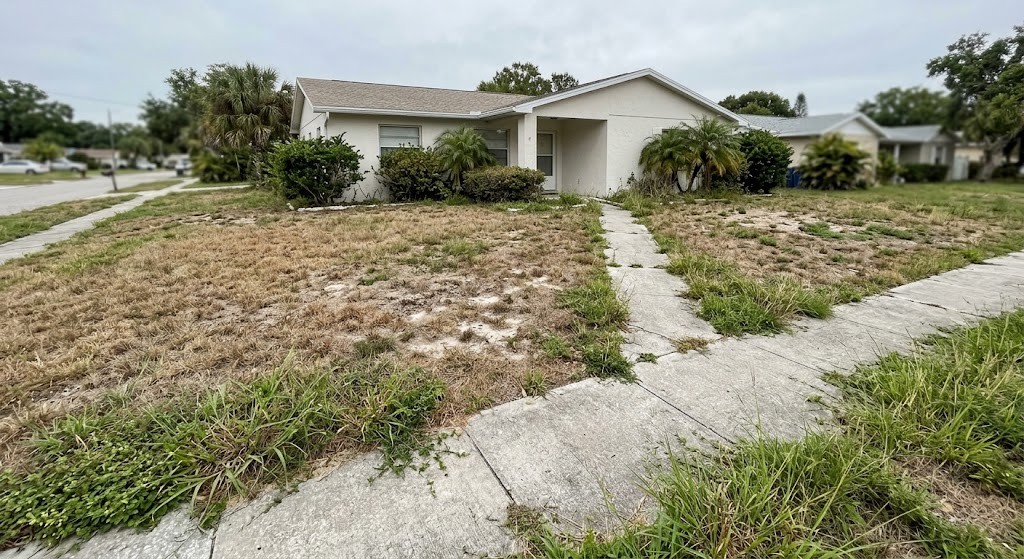
Overseeding thin patches into an established Bahia lawn is a different question from starting a new lawn from seed, and it's a reasonable maintenance step rather than a full installation decision. The same rules still apply, though — the new seed needs bare contact with soil, consistent moisture for several weeks, and protection from foot traffic while it germinates. Overseeding into an existing St. Augustine lawn isn't an option at all for the same reason a whole new lawn isn't: there's no viable St. Augustine seed to plant.
Zoysia seed — technically available, rarely the right call
A handful of Zoysia varieties are sold as seed, but germination is slow and uneven even under ideal conditions, often taking three to four weeks just to sprout and several months to reach a usable density. Most Zoysia lawns in Florida, including nearly all of the ones we install, come from sod or plugs for exactly this reason. Seeded Zoysia is more of a patience project for a hobbyist than a practical option for a homeowner who wants a lawn this season.
When seed is still worth considering
Two situations. First, Bahia pasture on genuine acreage — a few acres or more — where the cost difference between sod and seed at that scale is real money, and a rougher, slower-establishing pasture look is perfectly acceptable. Second, a budget-constrained large lot where the homeowner can accept months of bare ground and active erosion management in exchange for a meaningfully lower material cost. Neither situation describes a typical quarter-acre Clearwater subdivision lot.
Sod vs. Seed on a Standard Florida Lot: The Honest Math
On a 5,000 square foot yard, Bahia seed might save you a few hundred dollars against Bahia sod. Against that: two to three months without a usable yard, a real risk of losing a portion of that seed to the first heavy rain, and a strong chance you're back over-seeding bare patches by August. For most homeowners, the time and erosion risk cost more than the money saved.
There's also a maintenance cost to seeding that rarely makes it into the comparison. A newly seeded lawn needs daily light watering for the first two to three weeks just to keep the seed bed moist enough to germinate — miss a few days in Florida heat and germination drops off fast. Sod needs frequent watering too during establishment, but it's far more forgiving of an inconsistent schedule because it arrives with a functioning root system already attached, rather than depending on a seed coat staying moist long enough to sprout in the first place.
Ground prep matters just as much for seed as it does for sod, and it's an easy step to underestimate. Bare seeded soil that's uneven or poorly graded channels the first heavy rain straight through the seed bed rather than letting it soak in evenly, which is part of why erosion losses on seeded lots are so often concentrated in the same low spots a sod job would need graded anyway — see our lawn bed prep and leveling page for what that involves either way.
If you're working with a large lot and seed genuinely makes sense for your situation, we'll tell you that honestly rather than upselling. Full sod pricing is on our sod installation page, and if cost is the driving question, start with how much sod costs in Clearwater. Once you've settled on sod over seed, the next decision is which type — our comparison of the best sod type for Florida lawns covers that.