
Mulch depth gets treated as an afterthought — spread until the bag runs out, more or less — but depth is the single biggest factor in whether mulch actually does its job. Too thin and it doesn't suppress weeds or hold moisture. Too thick and it starts working against the plants underneath it.
Mulch Depth Guide for Florida: Correct Depth by Bed Type
| Item | Detail |
|---|---|
| Standard planted beds | 2 – 3 inches |
| New beds, heavy weed pressure | 3 – 4 inches |
| Around shrubs and established plants | 2 – 3 inches, pulled back from stems |
| Around tree trunks | 2 – 3 inches, kept 3–6 inches clear of the trunk |
| Absolute maximum, any bed | 4 inches |
Depth is measured after settling, not right out of the bag — freshly spread mulch is fluffier than it will be in a month, so a true 3-inch layer often looks closer to 4 inches on installation day.
Why more isn't better
Mulch works by blocking light to weed seed and slowing moisture loss from the soil. Once you're past 3 to 4 inches, you stop adding benefit and start adding problems. A thick layer holds so much moisture against the soil surface that it can suffocate roots and encourage fungal growth in Florida's humidity. It also becomes a slower-draining barrier that keeps light rain and irrigation from actually reaching the root zone at all — the water sits in the mulch and evaporates instead of soaking through.
The mulch volcano — and why it kills trees
The single most common mistake we see on established Clearwater properties is mulch piled directly against the trunk in a cone shape, often eight inches to a foot deep at the base. It looks tidy and it's exactly wrong.
- It traps moisture against bark that's meant to stay dry, which invites rot and fungal disease at the base of the trunk.
- It encourages girdling roots — roots that grow up into the moist mulch instead of down and out, eventually circling and choking the trunk as both grow.
- It hides trunk damage from lawn equipment and pests until the tree is already compromised.
- It suffocates the root flare — the point where trunk meets root — which needs air exposure to function properly.
How mulch depth interacts with irrigation
Depth and watering are more connected than most homeowners realize. A properly depthed bed at 2 to 3 inches lets irrigation and rainfall pass through to the soil while still slowing evaporation afterward — that's the actual point of mulching. Push past 4 inches and you get the opposite effect: light watering barely reaches the soil at all, so plants can look under-watered even when the sprinkler system is running on schedule. If a bed seems to need more water than it used to, checking mulch depth before adjusting the irrigation controller is worth doing first.
Matching material to the depth you need
Not every mulch material holds a given depth the same way. Shredded bark and cypress mat together and hold their depth well, so a 3-inch application stays close to 3 inches for months. Pine straw looks thick when it's fresh but compresses fast, so what starts as a 3-inch layer can settle to under 2 inches within a season — this is part of why pine straw beds need refreshing more often, independent of breakdown. Rubber and rock mulch don't compress at all, so the depth you install is close to the depth that stays, which matters if you're trying to hit a precise target around sensitive plantings.
The Right Mulch Depth for Florida Beds, Sun by Sun
Bed depth targets stay the same everywhere — 2 to 3 inches — but how fast a bed drops below that target depends heavily on sun exposure, which varies a lot across our service area. Open, full-sun subdivisions in Countryside and Oldsmar see faster UV breakdown and drier surface conditions, so beds there are more likely to dip under 2 inches before a full year is up. Canopy-heavy, established streets in Harbor Oaks and parts of Belleair hold depth longer under tree shade, but leaf litter can visually mask a bed that's actually thinning underneath — worth an occasional hand check rather than judging depth by eye from a distance.
What a Properly Depthed Mulch Job Costs
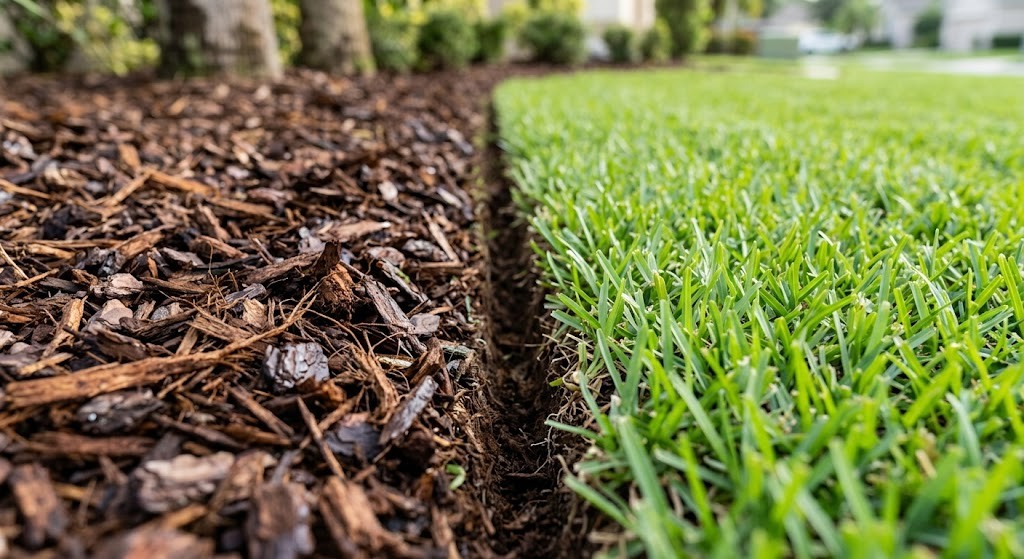
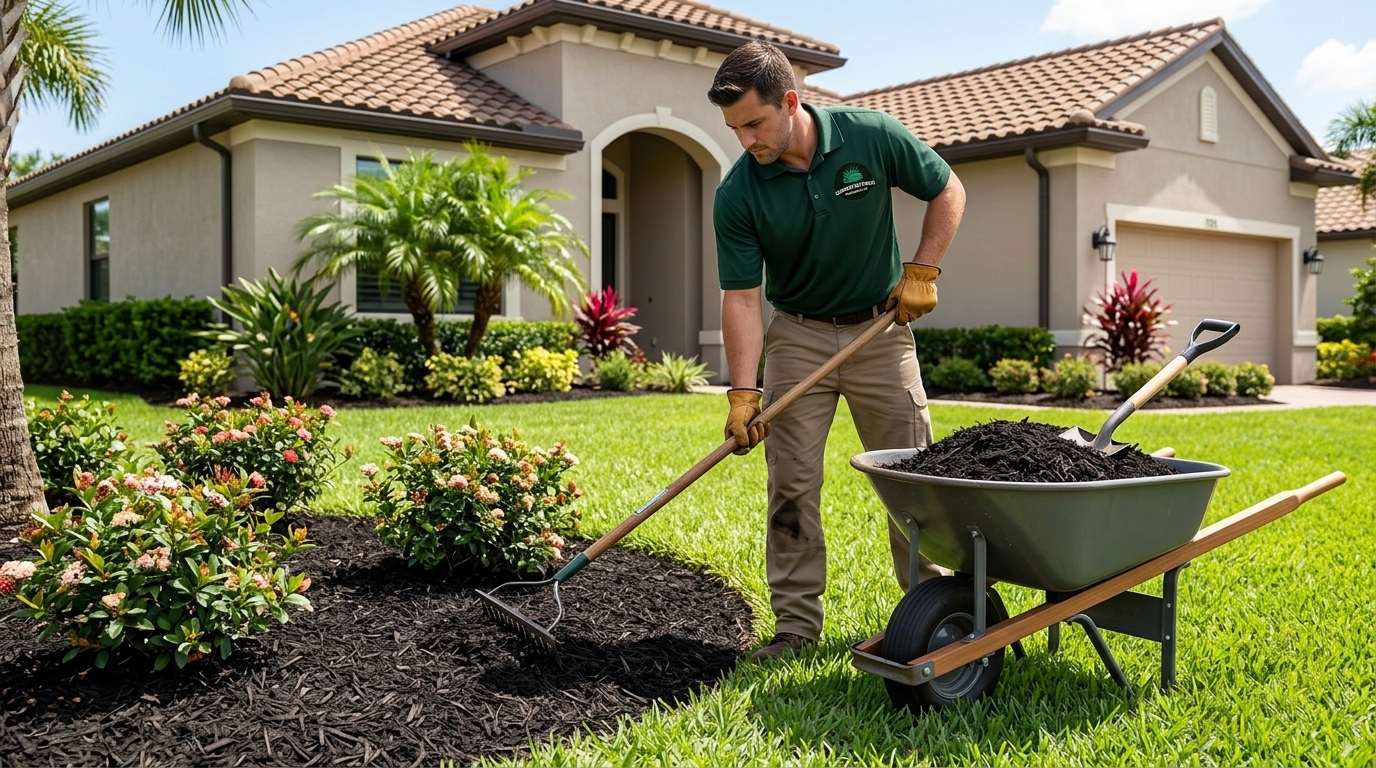
Getting depth right at installation costs the same as getting it wrong — the difference is measurement, not material. A professionally measured mulch job, calculated to actual square footage and target depth rather than a flat "however many bags looks right," typically runs $85 to $120 per cubic yard installed for bark or cypress, covering roughly 100 square feet per yard at the correct 3-inch depth. A defined, clean-edged bed border also helps mulch hold its measured depth instead of migrating into the lawn over a season — see our landscape edging page if your beds don't currently have one.
Coverage math — how much mulch you actually need
One cubic yard of mulch covers roughly 100 square feet at a 3-inch depth. At 2 inches, the same cubic yard stretches to about 160 square feet. At 4 inches, it covers closer to 80 square feet. Bagged mulch typically runs 2 cubic feet per bag, so it takes about 13-14 bags to equal one cubic yard.
| Item | Detail |
|---|---|
| 1 cubic yard at 2 inches | ≈ 160 sq ft |
| 1 cubic yard at 3 inches | ≈ 100 sq ft |
| 1 cubic yard at 4 inches | ≈ 80 sq ft |
| Bags per cubic yard (2 cu ft bags) | ≈ 13 – 14 bags |
Getting the depth right the first time
Measuring a whole property bed by bed is tedious, which is exactly why so much mulch ends up either too thin to work or piled into volcanoes out of habit. It also explains why DIY mulch jobs are so often uneven — a homeowner spreading by eye tends to over-apply near the truck or wheelbarrow and thin out toward the far end of a bed, simply because it's harder to judge depth accurately as the material runs low.
We measure square footage per bed, order to the actual depth needed rather than a flat estimate, and keep every trunk and stem clear on installation. Full pricing is on our mulch installation page, and if you're planning your mulching around the calendar rather than just depth, see when you should mulch in Florida. Bulk material only, no labor, is available through mulch delivery, and if beds need grading or weed clearing before that first measured layer goes down, start with our lawn and bed prep guide.